
In the Footstep of Dissent
A Guide to Orgosolo’s Route of Dissent
Orgòsolo pro terra de bandidos
finas a eris dae totu fis connota
ma oe a Pratobello totu unidos
Fizos tuos falados sunt in lota…
Orgosolo was known by all as a land of bandits until yesterday,
but today at Pratobello, united
as one, your children have taken up the fight…
Giuseppe Rubanu – Pratobello
There are villages you merely pass through, and others that pass through you with their story, changing you forever. Orgosolo is like this: a voice that clings to you, a story that never stops walking. Every stone, every painted wall, every silence amidst the woods of the Supramonte tells the same story: that here, freedom has never been a gift, but a conquest. A conquest to defend one’s ideas, values, and, very often, one’s own land.
Orgosolo proved this to the entire world when it made national headlines during the Pratobello Revolt of 1969, protesting against the construction of a military firing range on pasture lands. But Pratobello was not an event born out of thin air. It was not the child of chance, nor did it happen here without reason. Orgosolo has a long, deeply rooted history of struggle, of dissent, of challenging established power.
This history, however, is far less known: no images remain, we have no newspaper articles, no recorded interviews. And yet, it can still be glimpsed throughout its landscape—among natural reserves, archaeological sites, ruined churches, and abandoned villages. For this reason, based on a case study curated by the Center for the Study of Banditry in Orgosolo, “The Route of Dissent – The Other Side of Orgosolo” was born: an itinerary that weaves the symbolic locations of its civic history into a single narrative. A route to explore by car or, for the more athletic, by bicycle, traversing the places where the community of Orgosolo defended its dignity, its land, and its freedom.
Starting Point: The Former Town Hall of Orgosolo
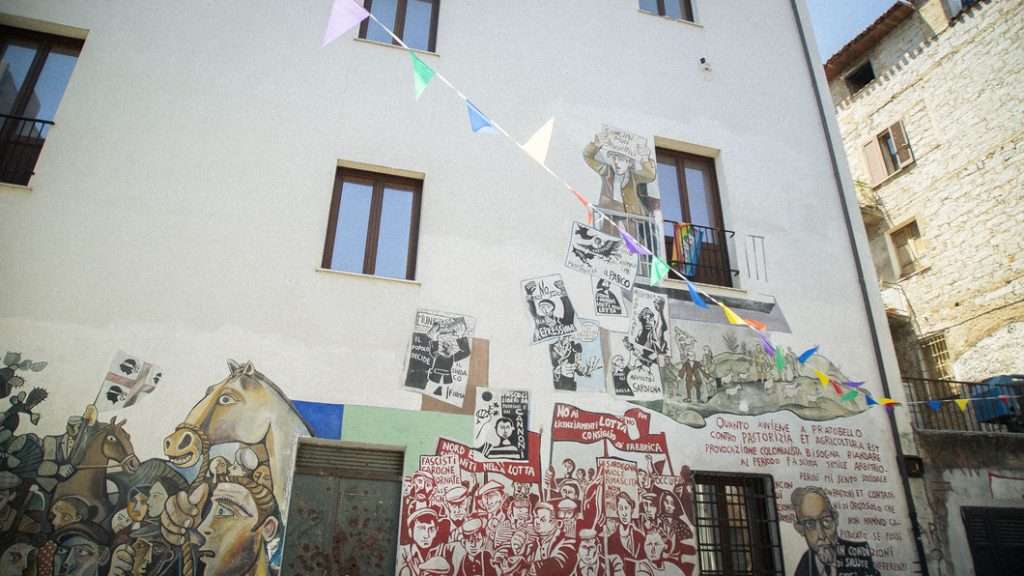
Everything begins at the former Town Hall of Orgosolo, located on the main street. What was once the heart of decision-making and civic demonstrations is now the starting point of a journey connecting history, landscape, and memory.
The first striking feature is the large mural on the facade, one of the most beautiful and photographed in the village: “Fertilizers, Not Bullets”—a title echoing one of the slogans born during the Pratobello Revolt, which over time became a statement of identity.
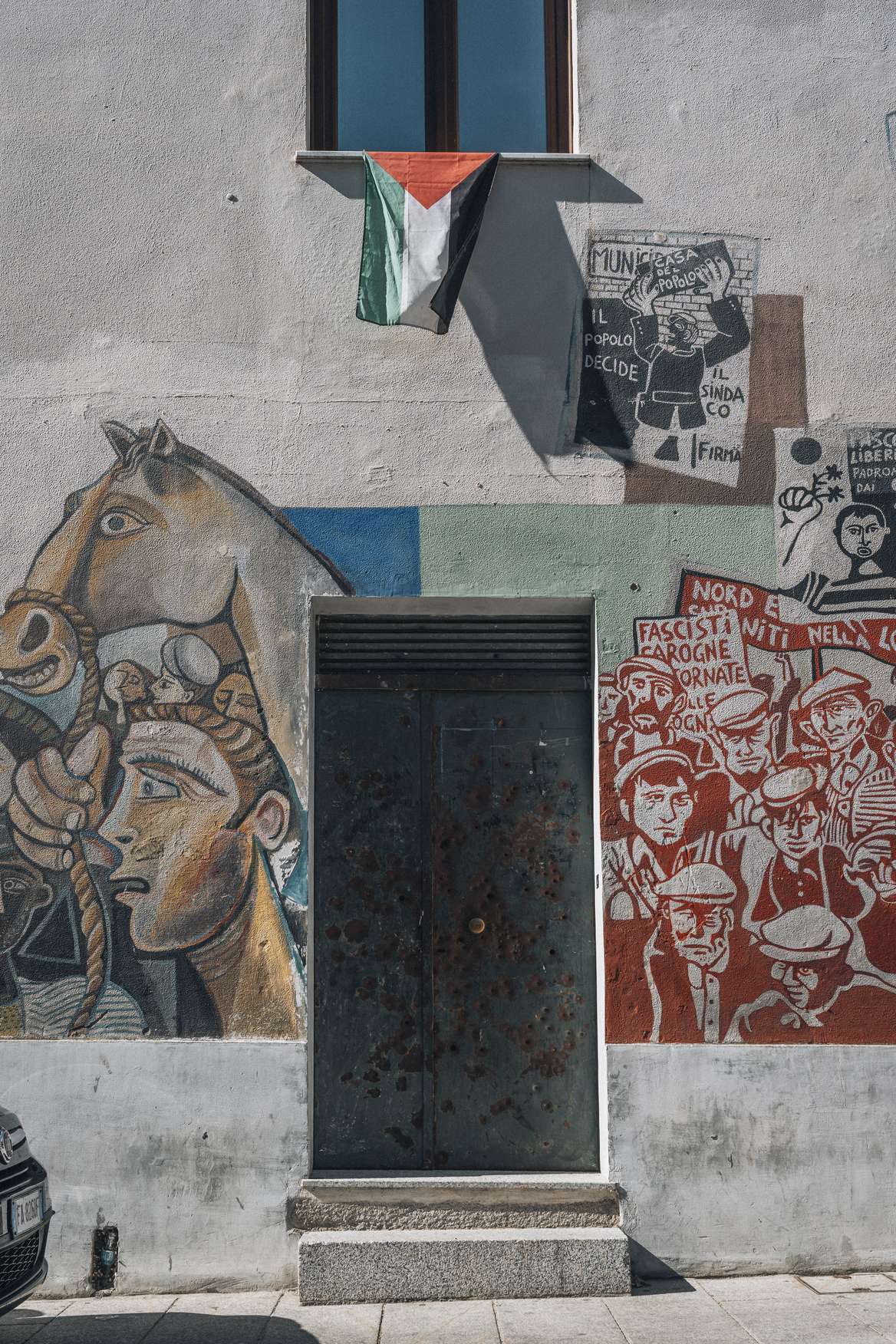
The artwork was created in 1984 by Francesco Del Casino, a painter from Siena and an art
teacher who arrived in Orgosolo in 1964. He was among the first to understand that the walls of
Orgosolo could become an open-air classroom: a way to convey history, politics, and daily life
through art. This mural was created over a previous fresco painted in 1976 and later destroyed
during the renovation of the Town Hall. The work incorporates the building’s openings—doors,
windows, balconies—as if to recall that the popular participation of Orgosolo’s citizens in
struggles and protests is now an indelible part of this building’s history.
It consists of three scenes, to be read from left to right, crafted in Del Casino’s unmistakable
style, influenced by Cubist painting. In the first scene, painted in somber tones, a war scene
unfolds: the trenches of World War I, and below, a wounded man lying on the ground, clutching
an anti-militarist sign. He is Emilio Lussu, captain of the 151st Regiment of the Sassari Brigade,
parliamentarian, anti-fascist, and founder of the Sardinian Action Party in 1921. Below are his
famous words, spoken in the Chamber of Deputies in May 1922, as the Fascists prepared to
march on Rome:
“Not for an inch of a distant border did we throw our youth to the wind, but for a higher ideal of
freedom and justice…”
In the center, a procession of men and women of all ages crosses the scene. Yet it is not a single procession, nor a single day: Del Casino merges into a single wave of people the many struggles that have swept across this land. There are the protests against the Rebirth Plans of the 1960s and 1970s, which promised development but brought factories and pollution; there are the metalworkers of Ottana, up to their Factory Council; and at the heart of it all is the struggle that is never forgotten here: Pratobello. Flags, banners, colors turning red—a people united in defense of their land and their dignity. Above the procession, the slogans on the signs and posters are reproductions of those actually printed during the nonviolent protest of 1969, one of 20th-century Sardinia’s greatest civil victories. To the right, a large portrait of Lussu appears alongside an excerpt from the telegram he sent to the population during those intense days of struggle:
“What is happening in Pratobello against pastoralism and agriculture is a colonialist provocation; therefore, I feel unconditional solidarity with the shepherds and farmers who have not capitulated. If my health were different, I would be among them.”
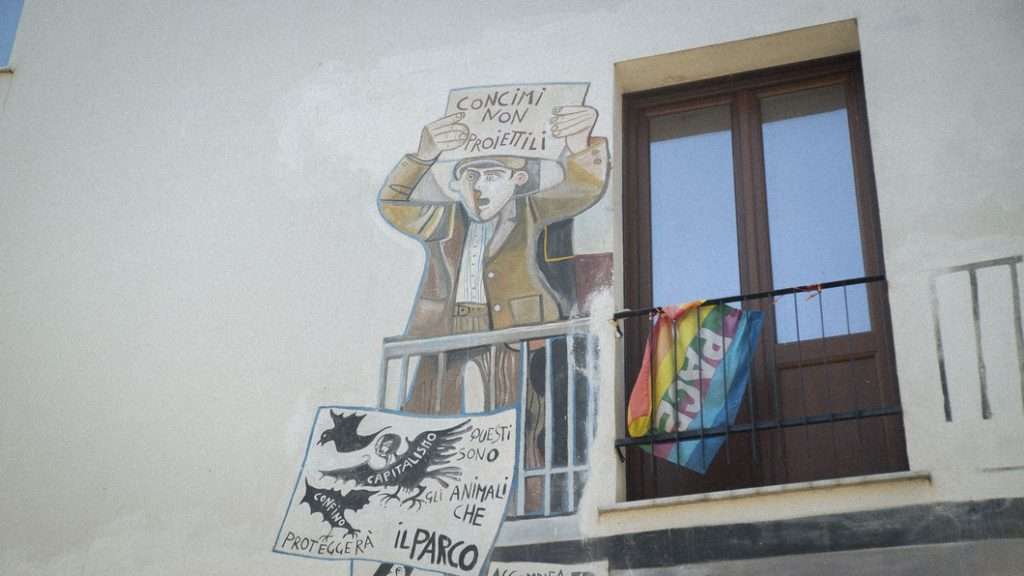
“Fertilizers, Not Bullets” is not merely a mural: it is a civic manifesto weaving art and collective memory together.
It tells our identity—proof that rebellion in Orgosolo is not just a gesture.
It is a way of being in the world that has marked our entire history.
Second Stop: Church of San Marco
“Dissent” is a simple word, yet it carries the weight of a world within it. It comes from the Latin dissidere, from dis- (“apart, elsewhere”) and sedere (“to sit”). It literally means to sit somewhere else: not to occupy the place assigned to you. The dissident is not someone who flees, nor someone who attacks; it is someone who stays, but elsewhere. Someone who looks at things from the same table but chooses a different chair.
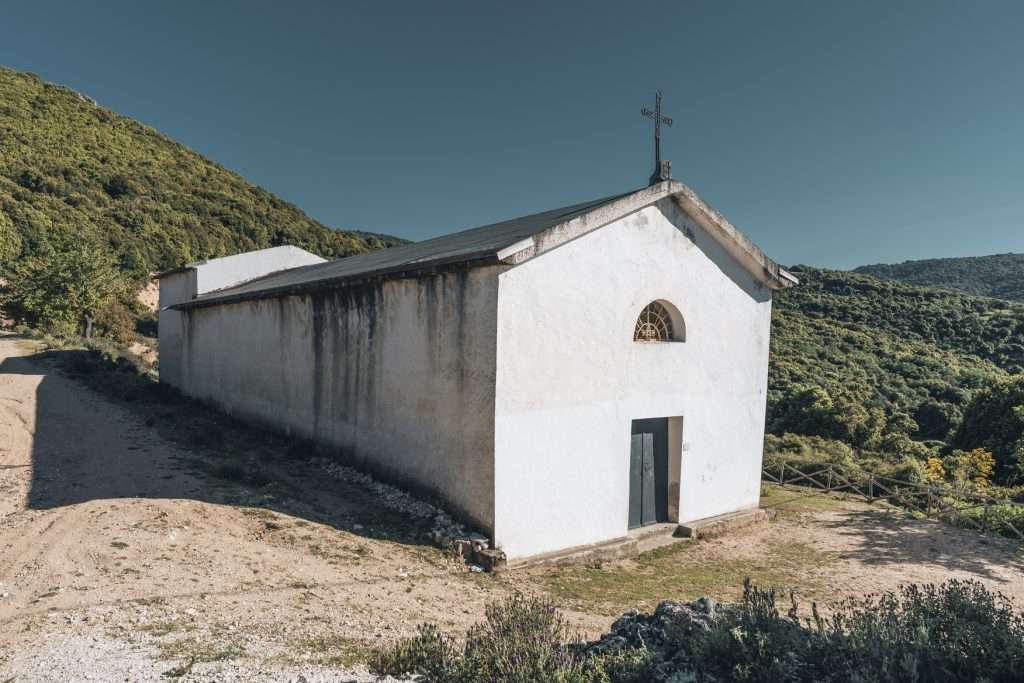
And here in Orgosolo, to dissent has always had a deeper meaning: it means not settling into decisions made by others, keeping the earth beneath one’s feet and dignity in one’s eyes. It means to resist. Many forms of dissent have threaded through Orgosolo’s history—those of a village that defended its land, its water, and its voice from outside interference through assemblies, manifestos, and occupations. Always in a nonviolent manner, with the participation of everyone: women, men, children, and the elderly. One of these events is the focal point of the second stop on our itinerary, the Church of San Marco.
This story takes place in 1931, or Year IX of the Fascist Era. Just a few years prior, Mussolini’s regime had erased all forms of democracy in Italy: the laws of 1926 abolished mayors and town councils, replacing them with a podestà appointed directly by the government and a council of a few men chosen from above. In Orgosolo, as elsewhere, decisions no longer belonged to the town. Yet there was one thing no one was willing to let go of: the communal land, which for centuries had belonged to everyone.
On December 27, 1930, in the town hall, the podestà signed a deed that changed everything: a “land exchange” with the State Property Office. Officially, it was a land swap, but in reality, the State obtained the best areas, while the Municipality was left with marginal lands. The most fertile and precious part of the Montes territory changed hands without the population knowing anything about it.
When news spread, anger surged. The shepherds, who had lived on those pastures for generations, saw an ancient right violated: that of su connotu—the “known”—the unwritten rule according to which every family had its space and no one questioned it. On the night between April 24 and 25, 1931, someone wrote phrases on the walls of the cemetery and the churches of Santa Croce and San Pietro that no one had ever dared utter: “Orgosolo, wake up, the communal land has been sold.““Saints, help us, the communal land has been sold.” It was a warning, a cry carved into stone. The following morning, at the church of San Marco, the village gathered for a celebration deeply felt in Orgosolo. As every year, since St. Mark’s Day was the traditional feast of the goat herders, sa ita—raw mutton and bread—was distributed to the children. An ancient ritual was also tied to this day: the women of Orgosolo, carrying a small cotton pouch with the eggs of the native silkworm, the “Orgosolo breed,” walked in procession from San Pietro to San Marco. The procession coincided with what was traditionally considered the date when mulberry trees began to bloom, the sole food source for silkworms.
But that April 25, things took a different turn.
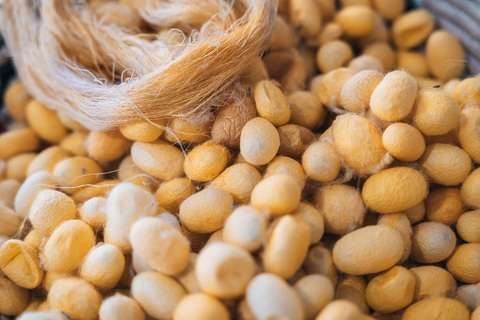
The women, one after another, left the church after Mass and headed toward the Town Hall. That day, they carried not only silkworm eggs in their bosoms, but the rage and dignity of an entire community. As soon as the guard opened the door, about fifty of them burst into the building.
The women drove out the employees, turned away the priest trying to mediate, and barred the door with a horseshoe. For three days and three nights, they occupied the Town Hall, sleeping on the floor, eating on their feet, searching through cabinets and drawers for the land exchange documents. It was a courageous collective protest that forced the authorities to react: one hundred carabinieri arrived from Nuoro to end the siege. Yet the women did not surrender until they obtained a written promise: the communal lands would neither be sold nor ceded to the State Property Office.
Former local administrators also took part in the revolt including former mayors Francesco Mesina and Giovanni Andrea Battasi, and former councilor Giovanni Antonio Seruis—along with anti-fascist professor Giovanni Valenti from Gorizia, a political exile in Orgosolo, who was sentenced to one year in prison. Giovanni Andrea Battasi, known as Tadeu, born in 1867, was among those who paid the highest price. On May 20, he was arrested in his vineyard and accused of being one of the instigators of the uprising. He was sent for two years into police exile in Bella, Basilicata, charged with “subversion and disturbance of public order”.
From historical documents, we know he repeatedly requested release on health grounds, but authorities rejected every appeal, fearing he might return “to incite the population”. He was repatriated in November 1932, thanks to an amnesty granted for the tenth anniversary of Fascism’s rise to power.
The episode at San Marco endured in memory as Orgosolo’s first major form of collective dissent. It was the day the village stood united and said no: no to decisions imposed from above, no to the sell-off of their land, no to injustice. That “no” in 1931 paved the way for all subsequent battles.
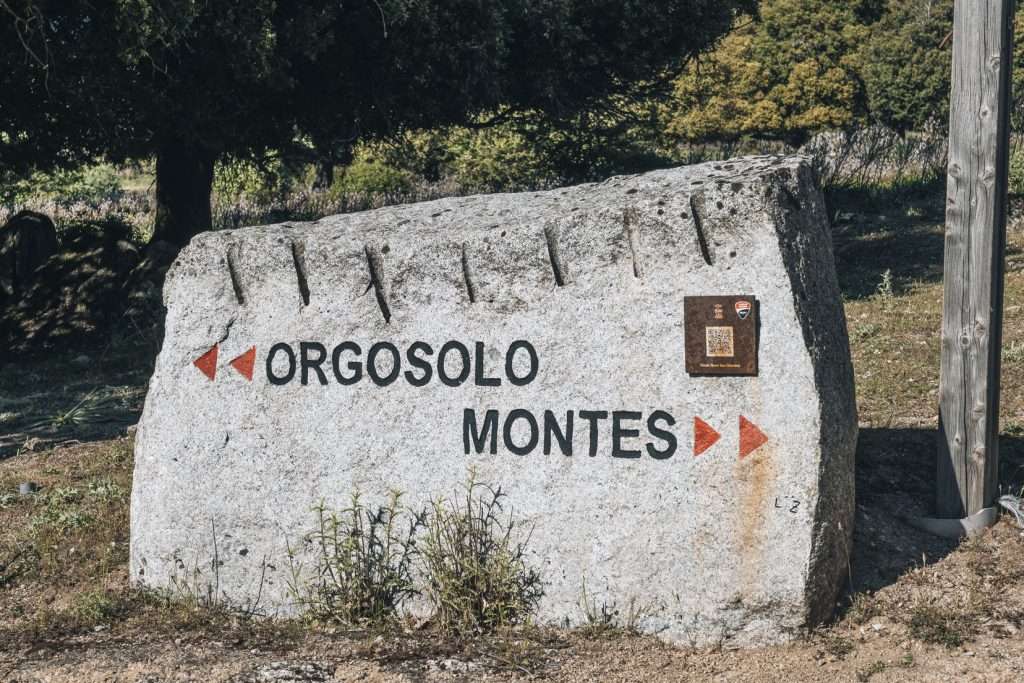
Third Stop: Su Dentes
Crossing the area of Montes, one can almost still hear the women shouting and defending their territory. Stopping in this rest area shaded by holm oak forests, one might encounter semi-wild pigs, grazing cattle, and goats leaping between rocks. It is a peaceful, serene area that nevertheless holds the key to understanding where this spirit of rebellion—inherent to Orgosolo and the Barbagia region in general—originates.
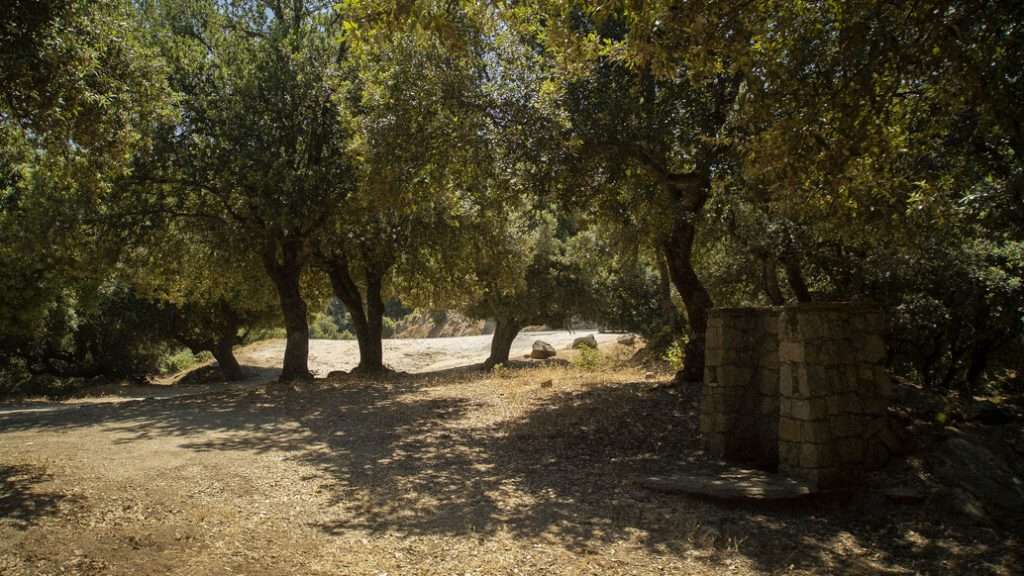
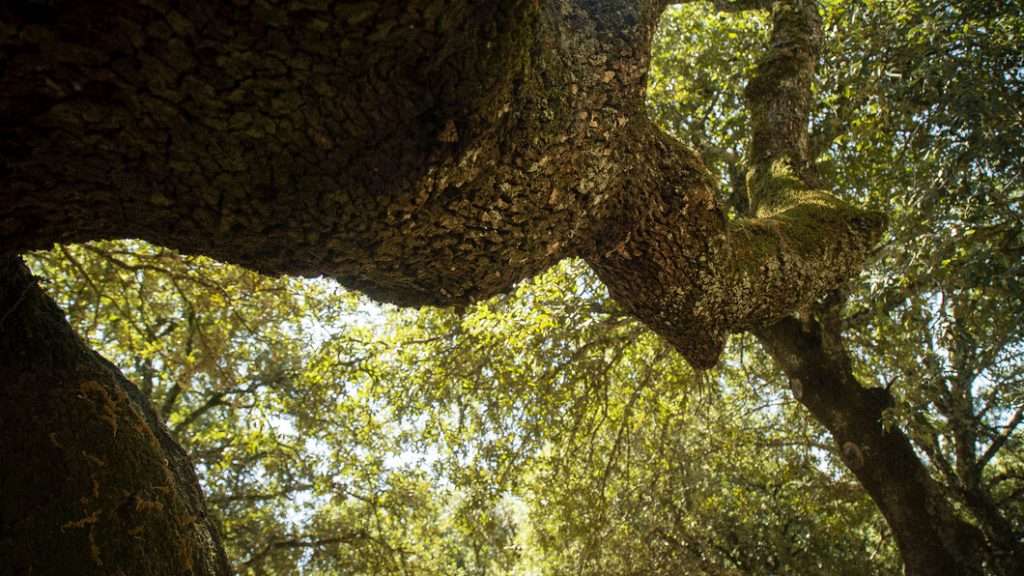
One cannot comprehend the history of Orgosolo without considering its location amidst the Supramonte mountains. The mountain is the ultimate realm where life is harsher, yet never solitary. This is demonstrated by traditions in Sardinian agro-pastoral culture such as sa paradura: if a shepherd lost his flock, everyone would donate a livestock animal to rebuild what was lost.
French historian Fernand Braudel (1902–1985) wrote that mountains are responsible, as much as or more than the sea, for the isolation of populations. Yet that is not all:
“The mountain is the refuge of freedoms, of democracies, and of rural republics.”
Fernand Braudel
Across the Mediterranean, one can observe how mountainous areas—especially the most marginal and peripheral—share common traits. They are anti urban zones, places outside grand history, resistant to domination. They are regions united by substantial material equality, limited social polarization, and resistance to state centralization and control.
This also occurred in Sardinia, particularly with the arrival of the Romans, when the communal, pastoral world of interior Sardinia faced the urban, hierarchical structure imposed by colonial rule. On one side were the Sardinians, tied to the common use of pastures and a horizontal balance among people; on the other, Rome, which introduced large estates (latifundia), private property, and written law. As Giovanni Lilliu, the father of Sardinian archaeology, wrote, it was “the historical juncture that split Sardinia in two“: the Romània of orderly cities and fields, and the Barbària of the mountains, still steeped in Nuragic and rural culture.
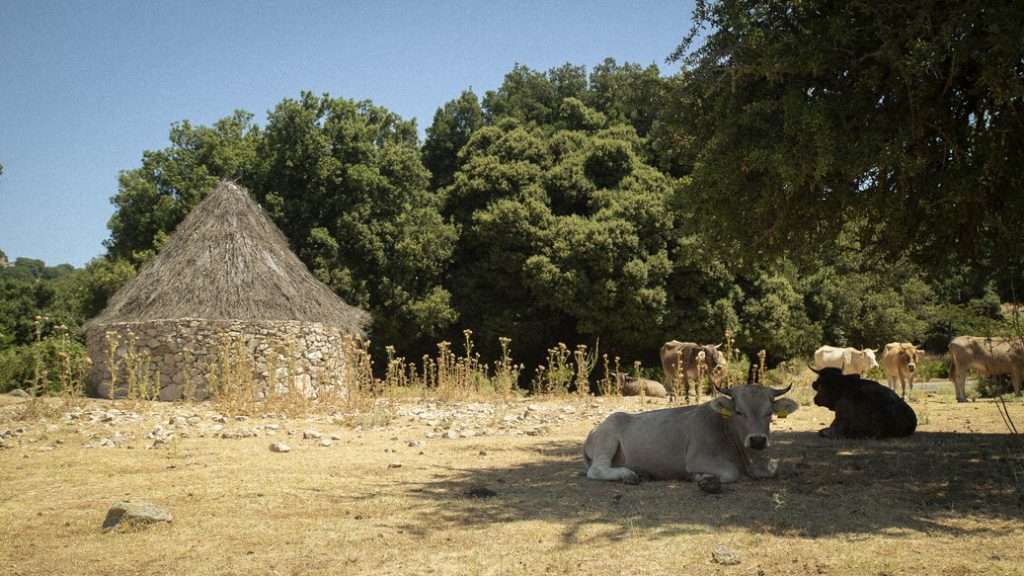
In this second island, which encompasses Orgosolo, a community model emerged that learned to defend itself, rely on itself, and resist external powers. A “fighting society,” as scholars would call it. If the plains represented state order, the mountains became the domain of autonomy, mutual aid, and shared freedom. It is from this ancient divergence of worldviews that one can understand the character of Orgosolo: trust in internal bonds, wariness toward what arrives from outside, and the collective strength of those who prefer to shape their reality with their own hands.
Orgosolo’s “dissent” is thus a story originating in Nuragic civilization—which endured here in Barbagia until the 6th century AD—and flowing like a subterranean stream into more recent acts of resistance.

Fourth Stop: Pratobello
The year is 1969. A turbulent period for Italy, marked by struggle: the movement of 1968 has not yet faded, and the “Hot Autumn” is brewing in the factories.
Here in Orgosolo, too, it is the year that would go down in history as that of the Pratobello Revolt. A revolt no longer against the Roman Empire, nor against a Fascist podestà, but against the Italian State and its army.
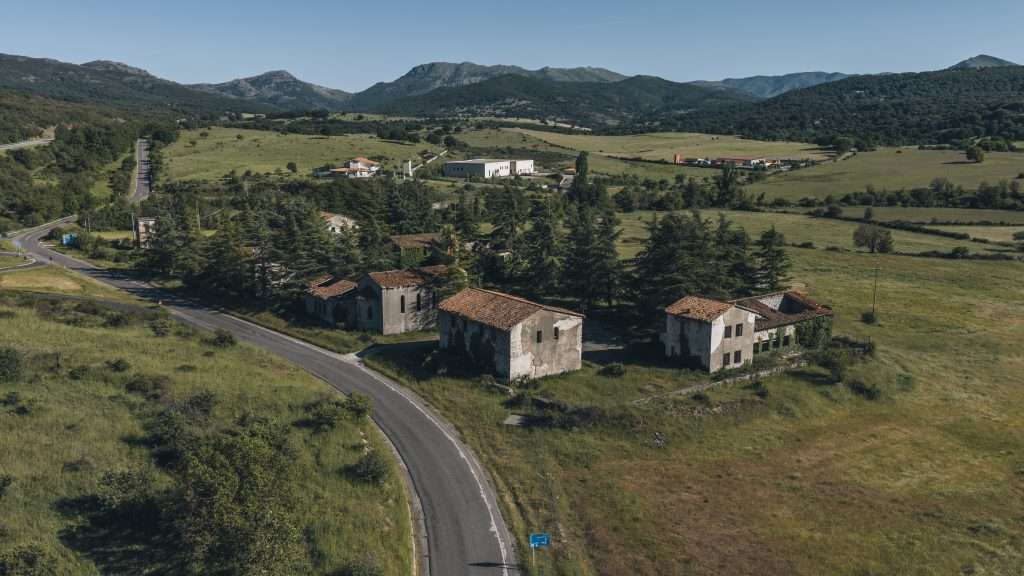
Following police exercises conducted the previous year, in May 1969 the military announced plans to establish a temporary firing range in the area for the Trieste Brigade, a post-war infantry unit formed within NATO.
On May 27, a public notice appeared on the town’s walls: for two months, the area would be used as a firing range. An expanse of 12,000 hectares of land, encompassing the finest communal pastures, including those of Pradu bordering the municipality of Fonni.
Shepherds were ordered to relocate 40,000 head of livestock, with a compensation of 30 lire per sheep per day an insult, considering feed alone cost 75 lire per kilogram. Above all, no one in town believed the word “temporary.” The fear was that, as had happened elsewhere in Sardinia, the base would become permanent.
From early June, Orgosolo transformed into a massive public assembly, giving birth to a nonviolent resistance. Everyone took part: shepherds, farmhands, students, women. On June 7, the popular assembly called for a demonstration at Pratobello to give “a first warning to the military and political authorities who arbitrarily decided to invade our territories.“
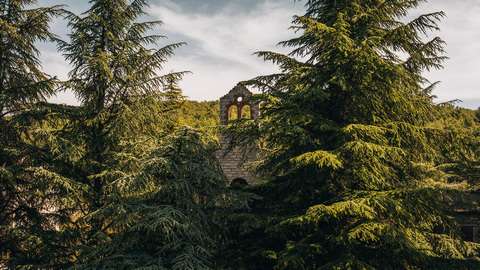
Mediation attempts by the prefectural commissioner, police headquarters, and trade unions yielded nothing. The people of Orgosolo refused the compensation: that land had no price.
When someone suggested appealing to Parliament, the community’s response was steadfast: “The shepherds’ battleground is not Parliament.“
Despite the resolve of Orgosolo’s citizens, the State showed no sign of backing down, and military exercises began on June 19. But Orgosolo refused to yield: three thousand citizens peacefully occupied the pastures. Sitting on the ground with hands raised, they faced the soldiers. Among them was uncle Battista Corraine, known as Zoeddu, nearly a century old. He stood tall and proud before military trucks, and when a soldier ordered him to move aside, he simply replied: “I am nearly one hundred years old, and if you harm me, I do not know if you will live to be one hundred like me.” A symbolic gesture that etched itself into town memory as the very image of civil resistance.
Women and children cut telephone wires, men and boys lifted pickup trucks with their bare hands to clear the path, others positioned themselves beside targets to prevent shooting. Armed forces responded with roundups and arrests: hundreds of protesters were carried away, yet the town did not stop. The entire community maintained its vigil on the plateau, day and night. Local politicians tried to contain the unrest, while an aging Emilio Lussu, unable to join the protests in person, sent a telegram of support. In his telegram, he described events at Pratobello as a colonialist provocation against pastoralism and agriculture. He condemned the State’s offered compensation as an insult -a band-aid that did not erase but deepened the injustice – stating that those conscious of their rights do not sell them out. Responsibility, he wrote, lay not with the military, but with politics. He concluded by demanding the immediate removal of the military and the end of the firing range, in the name of labor, production, and democracy.
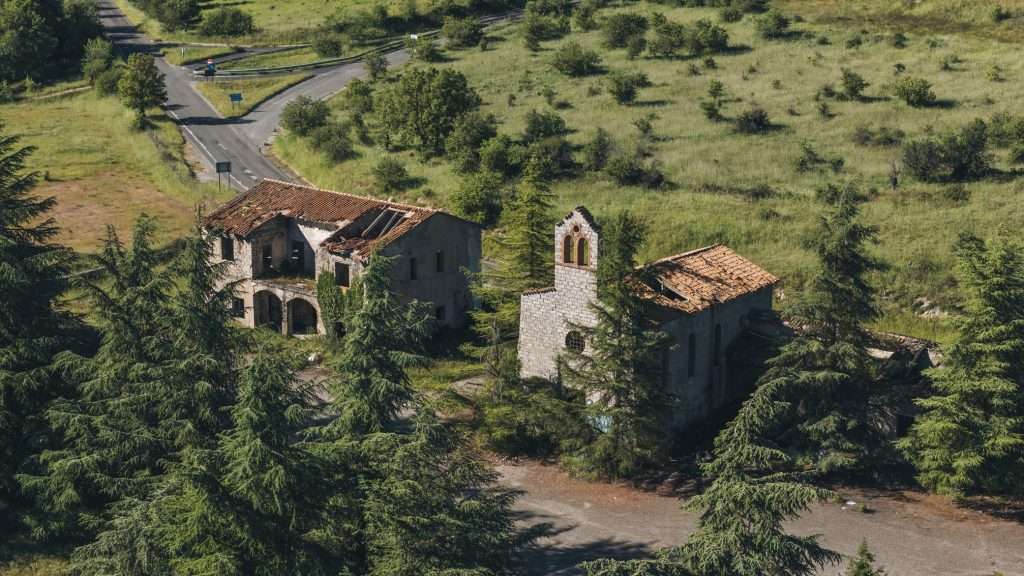
In the end, the State was forced to negotiate: a delegation of political and non political representatives (three shepherds, a farmhand, a truck driver, a student from the Christian Democratic Club, and the president of the Youth Club) traveled to negotiate with Defense Minister Luigi Gui and Undersecretary Francesco Cossiga.
They returned with a written guarantee: the Pratobello firing range would be dismantled, exercises would cease by August, and no permanent base would ever be established.
Viewed from today’s perspective, it was a collective victory born of a town’s unity: women and children on the front lines, shepherds, artisans, and students shoulder to shoulder.
At Pratobello, Orgosolo chose the power of nonviolence over the force of arms, proving that resistance can also mean defending one’s land and dignity without giving in to hatred. For those who wish, it is possible to return toward the village center along the same road: Orgosolo lies nearby, ready to welcome travelers seeking to conclude their journey where it all began.
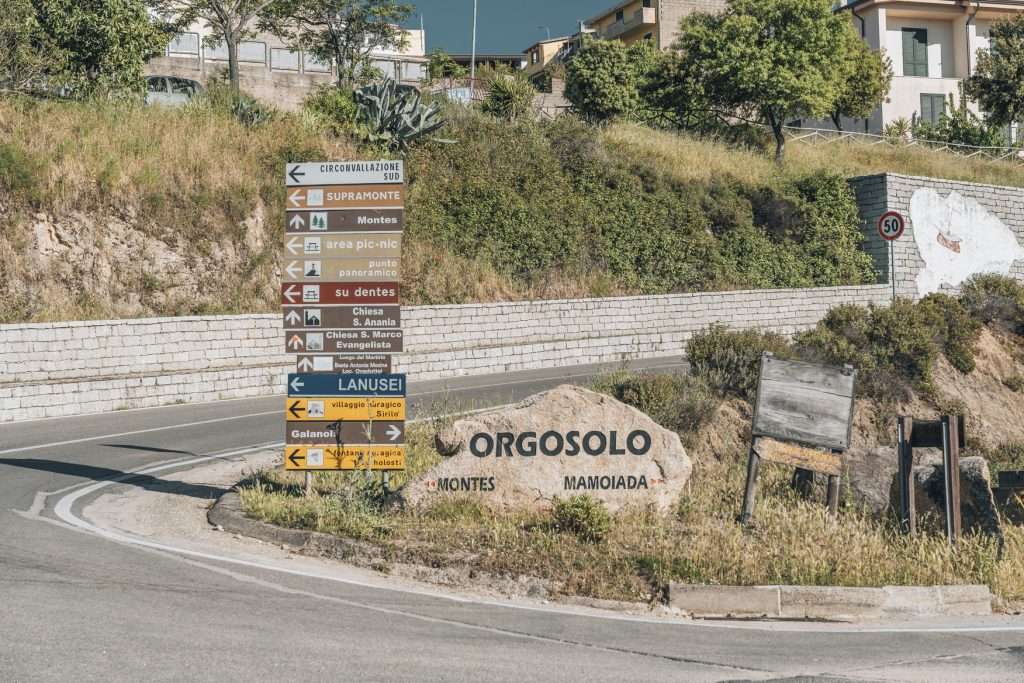
Those who choose to continue in the footsteps of disobedience can venture further, passing the Domus de Janas of Salhopasa—three rock-cut chamber tombs, among which the first stands out with its splendid ritual hearth.
The Domus de Janas represent one of Sardinian culture’s earliest and most fascinating expressions: underground tombs carved into rock as early as the Neolithic era, showcasing rituals and symbols of communities deeply rooted in the earth.
In 2025, this extraordinary heritage was recognized by UNESCO as part of the serial site “Funerary Traditions in Sardinian Prehistory: The Domus de Janas”.
It is now time to enter Orgosolo’s agricultural heartland. There, among vineyards and cultivated fields, another story of resistance awaits—older yet still alive: a tale of water, power, and the future.
Fifth Stop: Locoe
What is a utopia? An island that does not exist, but which stubborn souls try to build nonetheless. Many call Barbagia “an island within an island” to express its distinctiveness from the rest of Sardinia.
Here, a fighting, distinct, rebellious spirit has always thrived—born of a dream rooted in the soil, among dry stone walls and silences. The dream of those who continue to believe another way of living is possible. Idealists or visionaries—time will decide.
Oscar Wilde certainly had clear thoughts on the value of utopias:
“A map of the world that does not include Utopia is not worth even a glance, for it leaves out the one country at which Humanity is always landing. Progress is the realization of Utopias.”
Yet, what is a utopia for some often turns out to be a nightmare or dystopia for others. This happened in this island’s history when two worldviews clashed, as seen in the conflict between the communal, pastoral Nuragic civilization and Rome’s imperial, hierarchical structure.
It happened again in the 20th century, in the clash between the community-rooted agro pastoral vision and consumer society, which sought to fence off, divert, and exploit one of this region’s most precious resources: water.
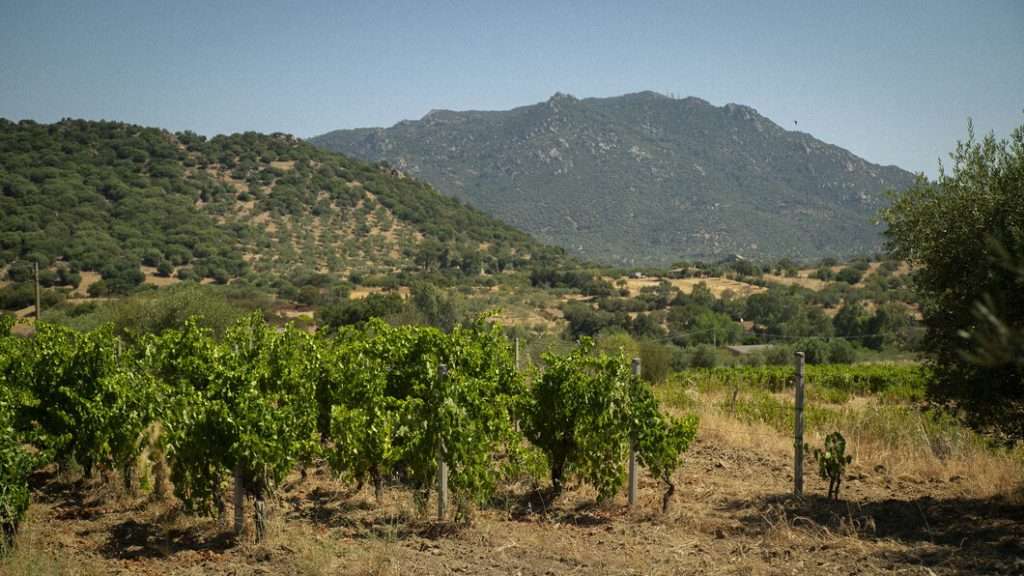
Past the village, the route descends into the small plain of Locoe – a land of vineyards, olive trees, and fields. Here, a 20-million cubic-meter dam was slated for construction to generate hydroelectric power. To the State, it represented modernity, development, the future. To the people of Orgosolo, it was a sentence: over two hundred hectares of farmland submerged.
On March 6, 1947, the village responded as only it knew how: together. Fifteen hundred people gathered in the main square, led by women, to defend their land. Behind the project was the Gallisai family of Nuoro, an ancient noble family turned entrepreneurial. Flour, pasta, talc, ice, ceramics, electricity: the Gallisai family had helped transform Nuoro from a pastoral town into an industrial city—a symbol of advancing modernity.
Yet here in Locoe, two worlds stood face to face. On one side was the agro-pastoral community, for whom water meant life, bread, and sharing. On the other was consumer society, which viewed water as energy, profit, and power.
Water for irrigation versus water for industrial production.
Thus, the utopia of progress revealed its double face: a promise for those who decided, a loss for those who endured.
Thanks to protests and the town council’s support, the dam project stalled, though it did not disappear completely.
In 1957, the Gallisai firm obtained a concession decree to construct the dam under a nearly identical plan, and on February 25, 1959, technicians arrived in Locoe to survey the site. Discontent erupted once more among landowners, the community, and the town council: steadfast protests led to the project’s final abandonment in those areas.
The land remained with the people, and with it, another vision of the future: a different utopia, built not of concrete, but of freedom.
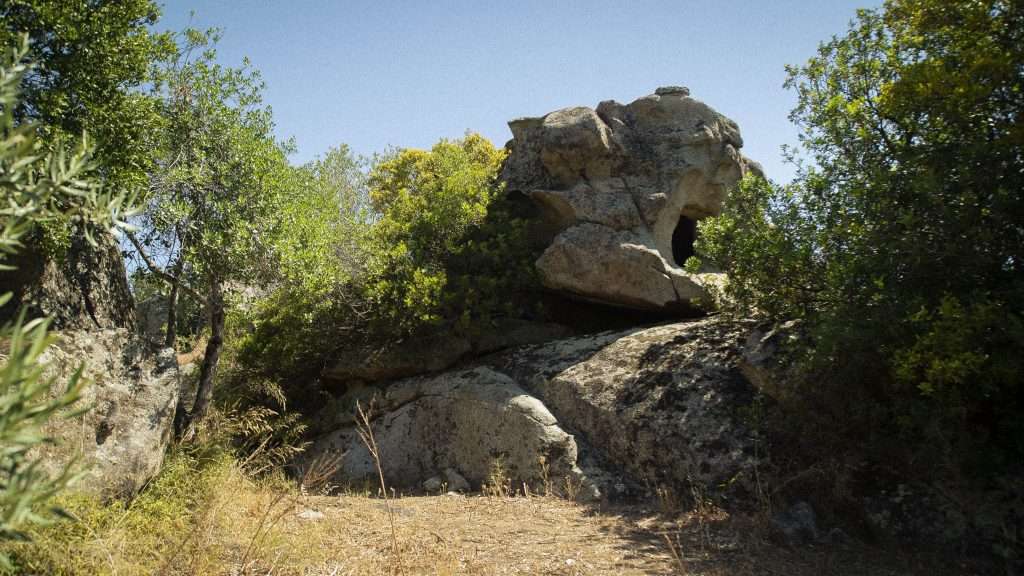
It is now time to return toward the village, but before the final stop, one can pause at the Domus de Janas (“fairy houses”) of Su Calavriche, dating back to around 3500 BC. Three granite-carved tombs with surviving traces of paint inside.
Sixth Stop: Sa Pandela pro Orgosolo
After Locoe, the path encounters a dream shared by all: a world without wars. Gino Strada, co-founder of Emergency, when accused of being a utopist, replied that he considered it a compliment, not an insult. And that utopia:
“It is the salt of life; it gives meaning to daily commitment, creates movement, and provides a compelling reason to shift from ‘I’ to ‘we.’ Every breakthrough in human history, in every field—starting with science—was an illusion, an intuition, until the day before it became reality.”
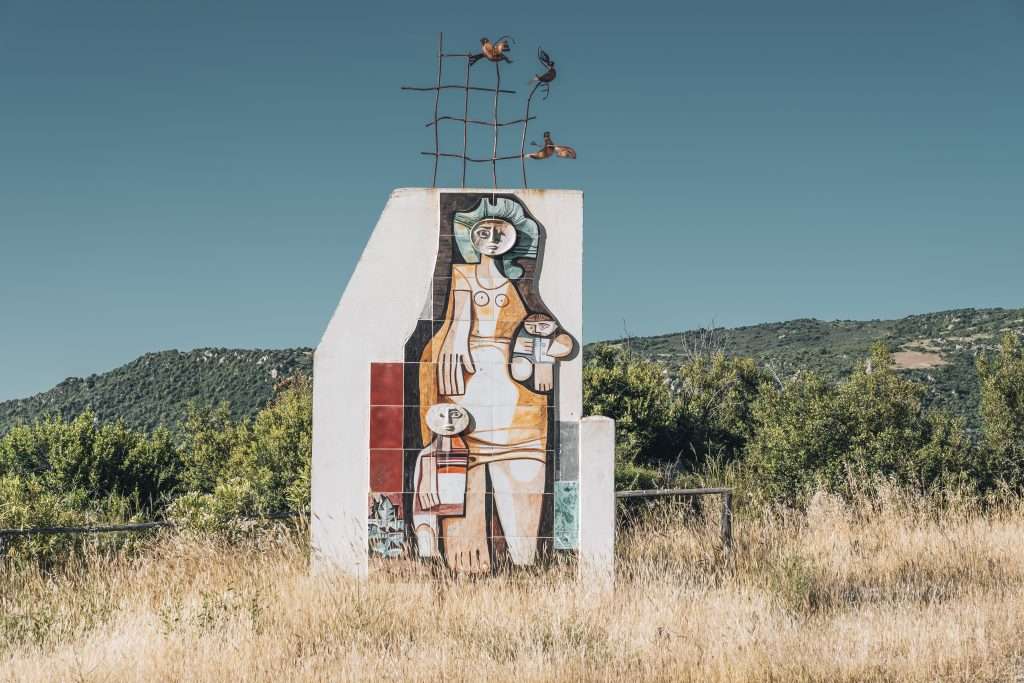
The final stop on the route is dedicated to the utopia of peace: Sa Pandela pro Orgosolo. Unveiled in 2016, it derives its name from Pandela, meaning “flag” in Sardinian. More specifically, Sa Pandela is the banner bearing the images of St. Peter the Apostle, patron saint of Orgosolo, which leads the grand procession in his honor every June 29.
The monument draws inspiration from this tradition. Designed by Francesco Del Casino – the artist from Siena who captured Orgosolo’s soul through its murals – and treated together with Teresa Podda, Pino Muggianu, and the entire community, Sa Pandela is a masonry and ceramic installation greeting visitors arriving in town. For fifteen days, dozens of people worked side by side: donating time, materials, or simply a helping hand.
After clearing the area along the Nuoro/Locoe road, the concrete structure was placed, whitewashed, and decorated with ceramic tiles forming a mosaic of a mother with two children—a universal symbol of life, welcome, and hope.
Looking closely, one observes a young figure cradling a dove on her hand—a gesture of peace connecting earth to sky. On one side of the structure, verses by Juvanne Pira, a poet, shepherd, and voice of Orgosolo’s canto a tenore, stand as a hymn to pastoral life and friendship. At the top, three wrought-iron dves look toward the horizon: emblems of peace, freedom, and continuity—as if a people’s dream could truly take flight.
Thus Orgosolo planted its Pandela at the entrance of the village: not a flag of war, but a banner of peace, built together, stone by stone, as in traditional community festivals where everyone contributes.
The invitation is written alongside in Pira’s verses:
Faghimos d’amistade unu nuraghe.
(Let us build a nuraghe of friendship.)
From the resistance of Nuragic civilization to the revolt of San Marco, through Locoe and on to Pratobello, the same voice echoes across centuries: that of a community that never stopped saying “no” to imposition, transforming struggle into awareness and disobedience into identity.
Today, that voice speaks through murals, songs, poetry, and the stories of those in Orgosolo dedicated to resisting without destroying, to building a better world.
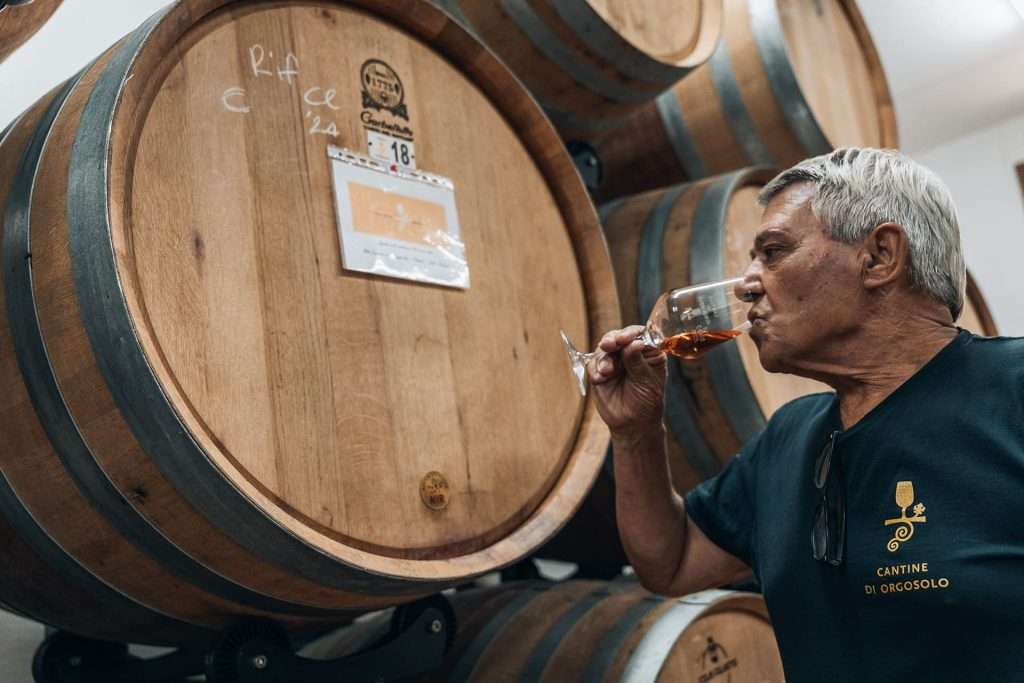
And so, returning toward the village center, one can make a final stop at Cantine di Orgosolo – born of the courage of small producers united in a shared vision: transforming the land, together, into the future.
A fitting way to end the journey and to toast, perhaps with a glass of Cannonau, to the dissident that continues to walk within each of us.